All outfit images are AI-generated. The cut, patterns and colours of historical and ethnic dress may be inaccurate. They are for creative reference only and are not a basis for serious historical or folklore research.
White Floral Robe & Soft Headcloth
白花褶子+软巾
Description
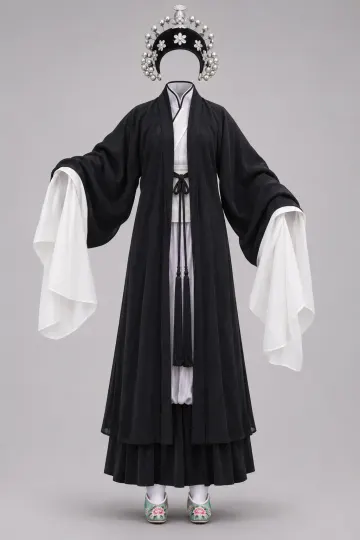
头戴软缎小生巾,分前后片,前片折叠、后片平直,底缘掐绦线,两侧各有两片耳子,末端呈如意头,帽后垂两根绣花飘带,帽身绣缠枝牡丹,与褶子纹饰相配;内穿水衣,搭配白布护领;外穿白色男花褶子,采用柔软绉缎制成,袍身宽松、长及足,斜襟大领交叠,大襟右开,通身均衡分布牡丹团花彩绣;阔袖袖口接有白色纺绸水袖,长一尺余;褶子内穿白色彩裤,露出裤脚;腰系丝绦;足穿白色素袜;搭配黑缎面白底厚底靴。
Prompt
A soft satin xiaosheng jin headpiece has separate front and back panels, with a folded front and a straight back, corded trim along the lower edge, two side tabs on each side ending in ruyi-shaped tips, and two embroidered streamers hanging from the back; its embroidered scrolling peonies match the robe’s decoration. A shuiyi undergarment is worn with a white cloth collar protector; over it is a loose, ankle-length white male huazhezi robe made of soft crêpe satin, with a large overlapping diagonal collar, a right-opening front, and colorful embroidered peony roundels evenly distributed across the robe; white silk water sleeves, each over a foot long, are attached to the wide cuffs; white caiku trousers are worn beneath the robe, with the hems visible; a silk sash is tied at the waist; plain white socks are paired with thick-soled boots that have black satin uppers and white soles.
About this outfit
Peking opera costumes use conventionalized designs to convey a character’s identity and personality, transforming and exaggerating elements of everyday dress for the stage.1 The pei and zhezi are both forms of everyday attire in traditional Chinese opera costumes.2 The xiaosheng headpiece is worn for young male roles such as gentlemen, scholars and students. It has a folded front section, a flat back section, side flaps with ruyi-shaped ends and two embroidered streamers hanging behind.(No checkable source found; for reference only) White water sleeves may be attached to the cuffs of a zhezi. Their exaggerated theatrical form extends and amplifies gestures in performance.(partly sourced)1,4 Theatrical dress also includes a zhezi embroidered with patches of many colors, known as a fuguiyi, or robe of wealth and honor; it represents a scholar’s temporary hardship followed by later success.2
- 中国国家京剧院官网《漫谈京剧传统服饰》, 中国国家京剧院官网, 正文
- 美轮美奂的戏曲行头何以浸润中国特有的审美文化, 帔、褶子、开氅、坎肩、宫装、茶衣是各种类型的日常便服
- 中国非遗网「非遗知识课堂」《戏曲舞台上的盔头》(作者杨耐)(一), 中国非遗网, 正文
- 深圳龙岗区文化广电旅游体育局主办线上展览《龙凤呈祥——中国京剧服饰纹样图片展》(2021年6–8月), 深圳龙岗区文化广电旅游体育局主办线上展览, 2021, 正文
Compiled by AI. Sources were cross-checked independently, but AI can still make mistakes; do not use this as a direct basis for serious research.
Example images are for viewing only, not for download.
Outfit details
- Category
- Stage & theatrical
- Occasion
- Performance
- Region and culture
- China › Han
- Era
- Contemporary
- Social role
- Performer
- Gender
- Male
- Season
- All-season