所有服装图均由 AI 生成。历史、民族服饰的形制、纹样、配色可能有误,仅供创作参考,不能作为严肃历史或民俗研究的依据。
白花褶子+软巾
White Floral Robe & Soft Headcloth
描述
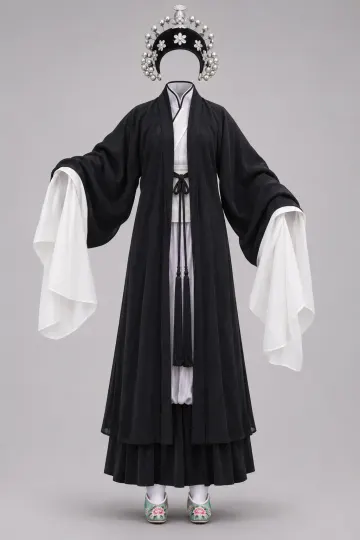
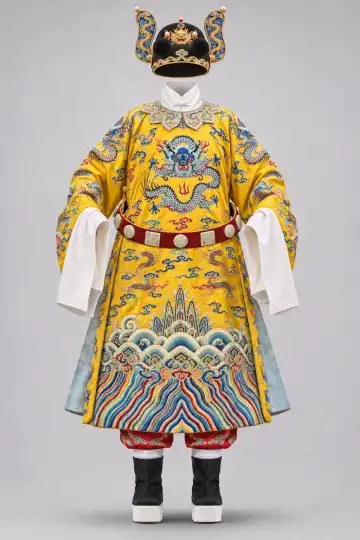
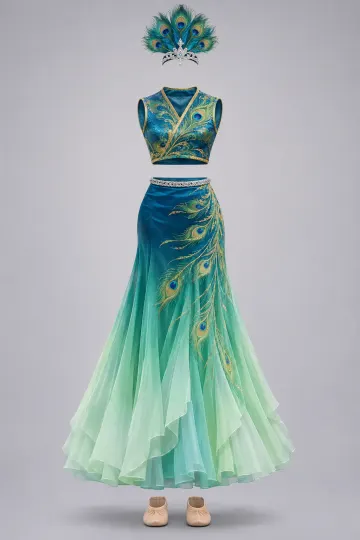
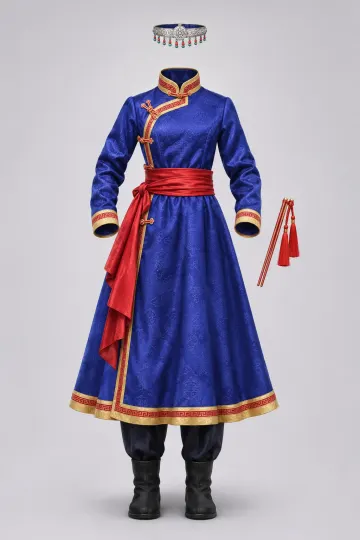
头戴软缎小生巾,分前后片,前片折叠、后片平直,底缘掐绦线,两侧各有两片耳子,末端呈如意头,帽后垂两根绣花飘带,帽身绣缠枝牡丹,与褶子纹饰相配;内穿水衣,搭配白布护领;外穿白色男花褶子,采用柔软绉缎制成,袍身宽松、长及足,斜襟大领交叠,大襟右开,通身均衡分布牡丹团花彩绣;阔袖袖口接有白色纺绸水袖,长一尺余;褶子内穿白色彩裤,露出裤脚;腰系丝绦;足穿白色素袜;搭配黑缎面白底厚底靴。
提示词
A soft satin xiaosheng jin headpiece has separate front and back panels, with a folded front and a straight back, corded trim along the lower edge, two side tabs on each side ending in ruyi-shaped tips, and two embroidered streamers hanging from the back; its embroidered scrolling peonies match the robe’s decoration. A shuiyi undergarment is worn with a white cloth collar protector; over it is a loose, ankle-length white male huazhezi robe made of soft crêpe satin, with a large overlapping diagonal collar, a right-opening front, and colorful embroidered peony roundels evenly distributed across the robe; white silk water sleeves, each over a foot long, are attached to the wide cuffs; white caiku trousers are worn beneath the robe, with the hems visible; a silk sash is tied at the waist; plain white socks are paired with thick-soled boots that have black satin uppers and white soles.
服饰说明
京剧戏服以程式化的设计表现人物的身份与性格,并在生活服装的基础上加以变形和夸张,以适应舞台表演。1 帔和褶子都是戏曲服饰中的日常便服。2 小生巾用于小生扮演公子、秀才或书生,分前后片,前片折叠、后片平直,两侧垂如意头耳子,帽后垂两根绣花飘带。(未找到可核对的出处,仅供参考) 褶子袖口可接白色水袖;水袖经过舞台化的夸张处理,能够延长和放大表演中的手势。(部分有出处)1,4 戏曲中还有绣满各色补丁的褶子,称为「富贵衣」,用来表现书生暂时落魄、日后腾达。2
- 中国国家京剧院官网《漫谈京剧传统服饰》,中国国家京剧院官网,正文
- 美轮美奂的戏曲行头何以浸润中国特有的审美文化,帔、褶子、开氅、坎肩、宫装、茶衣是各种类型的日常便服
- 中国非遗网「非遗知识课堂」《戏曲舞台上的盔头》(作者杨耐)(一),中国非遗网,正文
- 深圳龙岗区文化广电旅游体育局主办线上展览《龙凤呈祥——中国京剧服饰纹样图片展》(2021年6–8月),深圳龙岗区文化广电旅游体育局主办线上展览,2021,正文
资料由AI整理,证据做过旁路校验,但AI仍可能出错,请勿当做严肃研究参考的直接依据
效果图只展示,不提供下载。