All outfit images are AI-generated. The cut, patterns and colours of historical and ethnic dress may be inaccurate. They are for creative reference only and are not a basis for serious historical or folklore research.
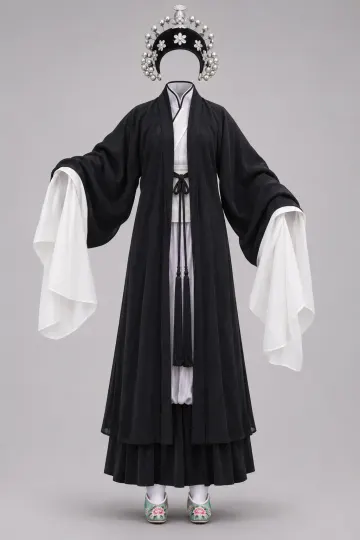
Near-Black Female Robe & Long Skirt
近黑女褶子+黑长裙
Description
银色大头头面;内穿水衣与彩裤;外穿黑色宽松长款女素褶子,以柔软垂顺的绉绸制成,高立领配白色领缘,对襟,阔袖接白色纺绸长水袖,衣长及足,通身素面;下穿黑色长裙,裙摆垂至脚面;腰系丝绦;足穿白色素面布袜与绣花旦角彩鞋。
Prompt
A large silver theatrical headdress; a water robe and colorful trousers underneath; a loose, long black women's plain pleated robe in soft, flowing crepe silk, with a high standing collar edged in white, a front opening, and broad sleeves finished with long white silk water sleeves, reaching the feet and left unembroidered; a long black skirt falling over the feet; a silk waist sash; plain white cloth socks and embroidered theatrical shoes.
About this outfit
Peking opera costumes take Ming-dynasty dress as a starting point, transforming and embellishing it into a stylized stage wardrobe rather than reproducing the dress of any single historical period.1 The name qingyi is associated with the dark blue-black outer garments worn by these roles; such plain dress is often used on stage to represent women living in poverty.2 Water sleeves are rectangular lengths of white fabric attached to costume sleeves. Those used for female roles generally measure two to three traditional chi and extend and amplify gestures in performance.1 The materials of a headpiece can also convey a character’s circumstances: silver ornaments signify poverty or mourning, while kingfisher-feather decoration suggests the splendor of royalty or official families.2 Plain dark blue-black outerwear contrasts with embroidered women’s pei robes; on the Peking opera stage, qingyi roles may also wear an ornate pei embroidered with roundels of phoenixes, accompanied by a kingfisher-feather headpiece and embroidered shoes.2,3
- 中国国家京剧院官网《漫谈京剧传统服饰》, 中国国家京剧院官网, 正文
- 美轮美奂的戏曲行头何以浸润中国特有的审美文化, 正文
- 深圳龙岗区文化广电旅游体育局主办线上展览《龙凤呈祥——中国京剧服饰纹样图片展》(2021年6–8月), 深圳龙岗区文化广电旅游体育局主办线上展览, 2021, 正文“女帔”
Compiled by AI. Sources were cross-checked independently, but AI can still make mistakes; do not use this as a direct basis for serious research.
Example images are for viewing only, not for download.
Outfit details
- Category
- Stage & theatrical
- Occasion
- Performance
- Region and culture
- China › Han
- Era
- Contemporary
- Social role
- Performer
- Gender
- Female
- Season
- All-season