All outfit images are AI-generated. The cut, patterns and colours of historical and ethnic dress may be inaccurate. They are for creative reference only and are not a basis for serious historical or folklore research.
Near-Black Plain Robe & Water Sleeves
近黑素褶子+水袖
Description
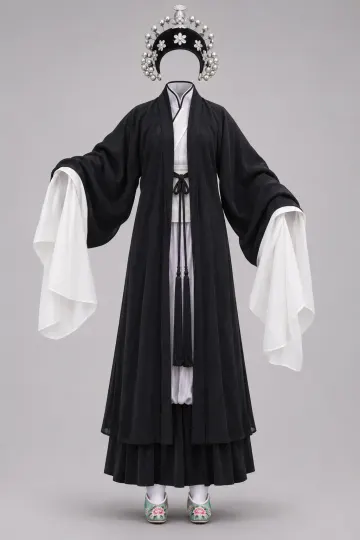
大头发式配从简银色头面与银钉;水衣与彩裤;黑色(近黑,不是青绿色)长款女素褶子,高立领、对襟、阔袖,柔软垂顺的绉绸素面无绣,长及足,领缘配白色;袖口缀白色纺绸水袖,长约二尺至三尺;内衬垂至脚面的黑色长裙;腰束丝绦;素袜;绣花彩鞋。
Prompt
A datou hairstyle with a simple silver headdress and silver studs; an undergarment and theatrical trousers; a long, near-black plain women's xuezi robe in soft, draping crepe silk, with a high standing collar, white collar edging, a center-front opening and wide sleeves, reaching the feet and without embroidery; white silk water sleeves attached at the cuffs, approximately two to three chi long; a black long skirt underneath reaching the tops of the feet; a silk sash; plain socks; embroidered theatrical shoes.
About this outfit
The name qingyi is associated with the dark blue-black outer garment worn by the role; in opera costume, this color can suggest modest circumstances.1 The xuezi is a type of informal opera costume; its plain, dark blue-black coloring distinguishes it from elaborate dress used to convey wealth and status.(partly sourced)1 White water sleeves are attached beyond the garment sleeves; those used for female roles are generally two to three chi long and extend gestures for greater stage expression.2 The materials of a female role’s headdress can also convey her circumstances: silver pins signify poverty or mourning, while kingfisher-feather ornament signifies royal or official wealth.1 Qingyi roles may wear embroidered stage shoes; opera costume is chosen to suit the role and dramatic context, rather than for splendor alone.3
- 美轮美奂的戏曲行头何以浸润中国特有的审美文化, 正文
- 中国国家京剧院官网《漫谈京剧传统服饰》, 中国国家京剧院官网, 正文“造型的夸张和美化”
- 深圳龙岗区文化广电旅游体育局主办线上展览《龙凤呈祥——中国京剧服饰纹样图片展》(2021年6–8月), 深圳龙岗区文化广电旅游体育局主办线上展览, 2021, 正文“角色行当”及文末服饰穿戴说明
Compiled by AI. Sources were cross-checked independently, but AI can still make mistakes; do not use this as a direct basis for serious research.
Example images are for viewing only, not for download.
Outfit details
- Category
- Stage & theatrical
- Occasion
- Performance
- Region and culture
- China › Han
- Era
- Contemporary
- Social role
- Performer
- Gender
- Female
- Season
- All-season