All outfit images are AI-generated. The cut, patterns and colours of historical and ethnic dress may be inaccurate. They are for creative reference only and are not a basis for serious historical or folklore research.
Royal-Blue Soft Kao & Zha-Jin Helmet
宝蓝软靠+扎巾盔
Description
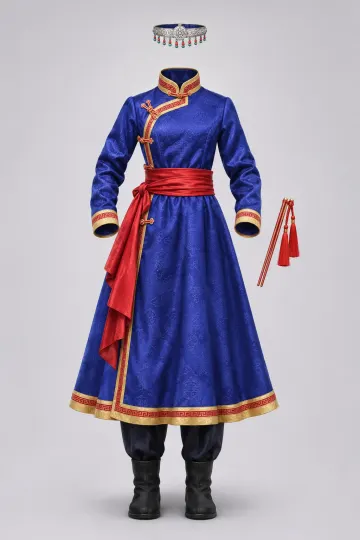
硬胎扎巾盔;素色衬箭;宝蓝缎圆领窄袖改良软靠,紧身束腰,袖口套白布小袖;三尖靠领与白布护领;四片宝蓝缎靠腿子由腰垂及足;红色彩裤;白色素袜;黑缎面白底厚底靴。
Prompt
A rigid zha jin helmet; a plain inner jianyi; a fitted royal-blue satin modified kao with a round collar, narrow sleeves and white cloth cuffs; a three-point kao collar and white neck guard; four royal-blue satin armor panels falling from the waist to the feet; red stage trousers; plain white socks; black satin boots with thick white soles.
About this outfit
Kao, also known as theatrical armor, is a Beijing opera costume used for military roles, derived from historical armor and transformed through theatrical exaggeration and embellishment.1,2 Traditional male kao has separate front and back panels with side slits, a three-pointed collar around the neck, and protective panels fastened at the waist; modified forms of kao also exist.(partly sourced)1,2 Hard kao has a back holder for flags, usually four triangular ones; kao worn without flags is called soft kao.1,2 One royal-blue satin male hard kao in an exhibition is worked mainly in couched gold embroidery, supplemented by bead and silk embroidery; the color of a kao generally corresponds to the role’s character, status, and facial makeup.1,2 Cai ku are roomy undertrousers used in Beijing opera and come in colors including red, white, and black; a martial male role wearing kao may pair it with red cai ku and thick-soled boots.(partly sourced)3,1
- 深圳龙岗区文化广电旅游体育局主办线上展览《龙凤呈祥——中国京剧服饰纹样图片展》(2021年6–8月), 深圳龙岗区文化广电旅游体育局主办线上展览, 2021, 正文
- 数艺网:戏服科普丨传统戏曲的服装分类之男靠, 正文
- 中国国家京剧院官网《漫谈京剧传统服饰》, 中国国家京剧院官网, S1「彩裤的应用」;S2「宝蓝缎平金绣鱼鳞锦男硬靠」
Compiled by AI. Sources were cross-checked independently, but AI can still make mistakes; do not use this as a direct basis for serious research.
Example images are for viewing only, not for download.
Outfit details
- Category
- Stage & theatrical
- Occasion
- Performance
- Region and culture
- China › Han
- Era
- Contemporary
- Social role
- Performer
- Gender
- Male
- Season
- All-season