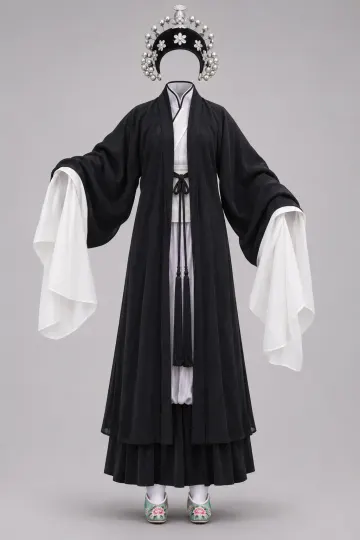
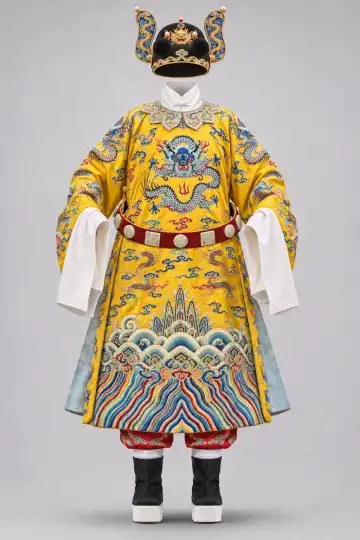
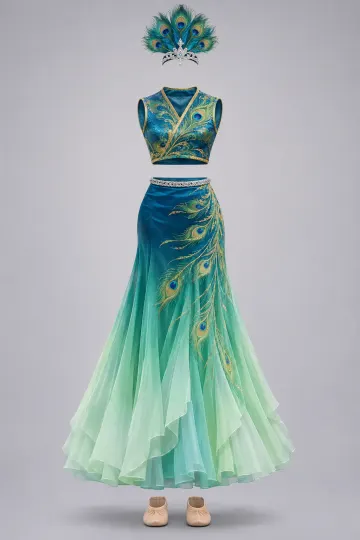
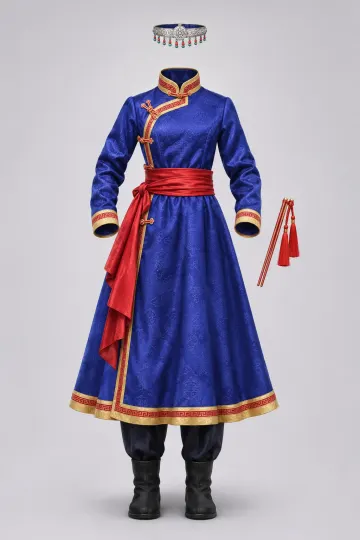
All outfit images are AI-generated. The cut, patterns and colours of historical and ethnic dress may be inaccurate. They are for creative reference only and are not a basis for serious historical or folklore research.
White Crepe-Satin Robe & Square Scarf
白绉缎褶子+方巾
Description
黑色方巾;内穿水衣;白布护领;白色软绉缎男花褶子,交领斜襟、大襟右开,阔袖长及足,通身彩绣牡丹团花;袖口接白色纺绸水袖;腰系丝绦;内穿白色彩裤;白色布袜;黑缎面白底薄底靴;折扇。
Prompt
A black scholar's headcloth; an under-robe; a white cloth neck guard; a soft white crepe-satin male floral robe with a crossed collar, right-overlapping front, wide sleeves, an ankle-length hem reaching the feet, and embroidered peony medallions throughout; white silk water sleeves attached at the cuffs; a silk waist cord; white trousers beneath the robe; white cloth socks; black satin boots with thin white soles; a folding fan.
About this outfit
The zhezi is a widely used form of informal stage costume, distinct from ceremonial garments such as the mang robe and the official robe.1 Peking opera costumes form a stylized, decorative system designed for performance, drawing on Ming-dynasty dress to portray characters from different periods.2 The huling is a white cloth accessory worn inside the costume around the neck. Caiku are loose under-trousers made in white, black, red and other colors, most often with a plain ground.2 White water sleeves are attached to the cuffs of opera costumes; those used for male roles are just over one chi long and can extend and accentuate gestures in performance.2 The patterns and styling of embroidered zhezi can vary by role type: one black man's floral zhezi used for martial clown roles is covered with scattered butterfly motifs and can be worn open or draped diagonally.3
- 美轮美奂的戏曲行头何以浸润中国特有的审美文化, 正文
- 中国国家京剧院官网《漫谈京剧传统服饰》, 中国国家京剧院官网, 正文
- 深圳龙岗区文化广电旅游体育局主办线上展览《龙凤呈祥——中国京剧服饰纹样图片展》(2021年6–8月), 深圳龙岗区文化广电旅游体育局主办线上展览, 2021, 正文「黑缎彩绣散摆蝴蝶纹男花褶子」
Compiled by AI. Sources were cross-checked independently, but AI can still make mistakes; do not use this as a direct basis for serious research.
Example images are for viewing only, not for download.
Outfit details
- Category
- Stage & theatrical
- Occasion
- Performance
- Region and culture
- China › Han
- Era
- Contemporary
- Social role
- Performer
- Gender
- Male
- Season
- All-season