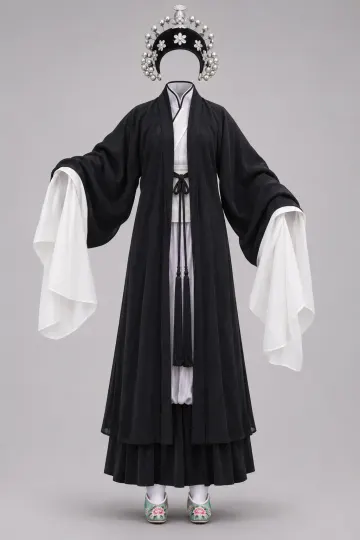
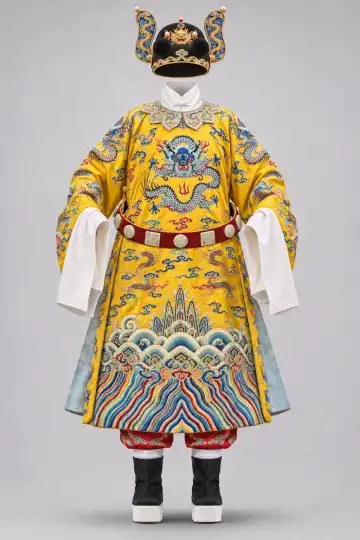
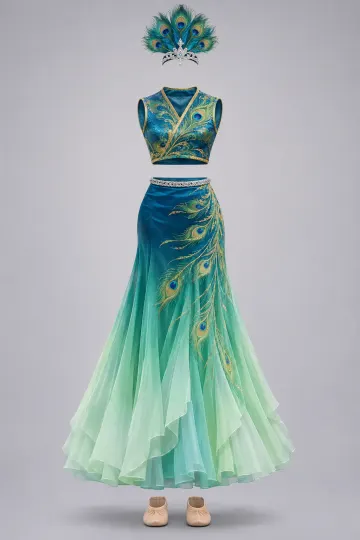
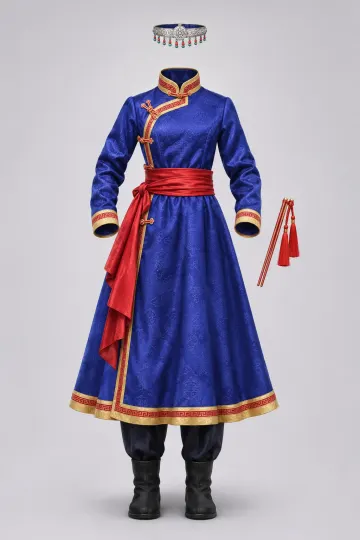
All outfit images are AI-generated. The cut, patterns and colours of historical and ethnic dress may be inaccurate. They are for creative reference only and are not a basis for serious historical or folklore research.
Blue Robe & Square Headcloth
青褶子+方巾+布靴
Description
方巾;水衣与白布护领;青色素面长款男式褶子,白色交领、大襟、阔袖,柔软绉绸或绉缎,衣长及足;袖口缀白色纺绸水袖;白色彩裤;腰间丝绦;布袜;薄底布靴。
Prompt
A square headcloth; an undergarment with a white cloth collar guard; a long plain blue-green men's opera robe in soft crepe silk or crepe satin, with a white crossed collar, overlapping front and wide sleeves, reaching the feet; white silk water sleeves attached at the cuffs; white trousers; a silk waist cord; cloth socks; thin-soled cloth boots.
About this outfit
The zhezi is a type of everyday robe in the theatrical wardrobe; opera costumes adapt and exaggerate everyday clothing for the stage.1 Peking opera costumes follow an established system, and their use must suit a character’s status and the dramatic situation rather than simply seek opulence.2,3 The huling is a white cloth lining accessory worn around the neck to frame the face and help keep the costume clean.2 Caiku are roomy trousers worn beneath the costume; most are plain, though patterned versions also exist, and their colors include white, black, and red.2 Most Peking opera costumes other than those with fitted sleeves have rectangular white water sleeves; those worn by male roles are over one traditional chi long and extend and amplify gestures in performance.2 The zhezi is an everyday robe, distinct from costumes such as the mang robe and official robe, which are worn for formal occasions.1
- 美轮美奂的戏曲行头何以浸润中国特有的审美文化, 正文,戏衣分类及形制段落
- 中国国家京剧院官网《漫谈京剧传统服饰》, 中国国家京剧院官网, 正文,独特的设计构想
- 深圳龙岗区文化广电旅游体育局主办线上展览《龙凤呈祥——中国京剧服饰纹样图片展》(2021年6–8月), 深圳龙岗区文化广电旅游体育局主办线上展览, 2021, 正文,“宁穿破,不穿错”段落
Compiled by AI. Sources were cross-checked independently, but AI can still make mistakes; do not use this as a direct basis for serious research.
Example images are for viewing only, not for download.
Outfit details
- Category
- Stage & theatrical
- Occasion
- Performance
- Region and culture
- China › Han
- Era
- Contemporary
- Social role
- Performer
- Gender
- Male
- Season
- All-season