All outfit images are AI-generated. The cut, patterns and colours of historical and ethnic dress may be inaccurate. They are for creative reference only and are not a basis for serious historical or folklore research.
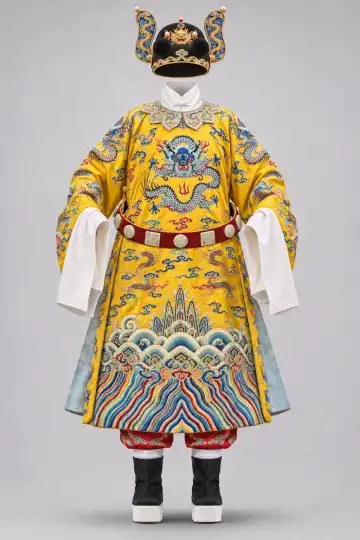
Bright Yellow Mang Robe & Yishan Crown
明黄蟒袍+翼善冠
Description
黑色纱质翼善冠,圆拱前屋、后山高起,两侧折角向上;白色水衣与护领;明黄缎面蟒袍,圆领大襟,长及足,胸前与两肩绣团龙,下摆绣海水江崖,两侧插摆外展,宽袖接长白绸水袖;腰间空悬松挂硬圈玉带;红色彩裤;黑缎白底厚底靴。
Prompt
A black gauze Yishan crown with a rounded front, raised rear section and two upward-folded wings; a white undergarment and protective collar; a full-length bright yellow satin mang robe with a round collar and overlapping front, embroidered dragon roundels on the chest and shoulders, waves and cliffs at the hem, flaring side panels and long white silk water sleeves; a rigid jade belt hanging loosely at the waist; red trousers; black satin boots with thick white soles.
About this outfit
Traditional Kunqu performance uses a wardrobe system in which cut, color, pattern, material and manner of wear together convey information about a role.1 The mang robe is a form of opera dress worn on formal occasions. Kunqu costume conventions distinguish rank: an emperor role may wear a yellow mang, while a minister role may wear a red one.(partly sourced)1,2 The white silk extensions attached beyond the sleeves are called water sleeves; they extend the arms and make movements more visible on stage.2 Opera costumes are created for stage performance and differ from everyday clothing; they are not principally intended to represent a specific historical dynasty.1,2
- 中国非物质文化遗产网论坛:戏曲学者、昆剧表演艺术家与舞美设计师谈《中国昆曲衣箱》(2010), 中国非物质文化遗产网论坛:戏曲学者、昆剧表演艺术家与舞美设计师谈, 2010, 正文,衣箱制与「五个渠道」
- 环球网艺术栏目:戏曲行头与审美文化, 正文,戏曲行头分类
Compiled by AI. Sources were cross-checked independently, but AI can still make mistakes; do not use this as a direct basis for serious research.
Example images are for viewing only, not for download.
Outfit details
- Category
- Stage & theatrical
- Occasion
- Performance
- Region and culture
- China › Han
- Era
- Contemporary
- Social role
- Performer
- Gender
- Male
- Season
- All-season