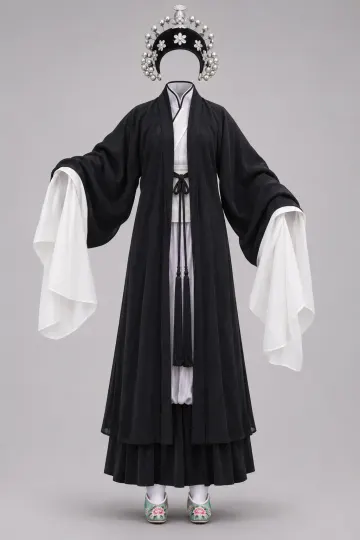
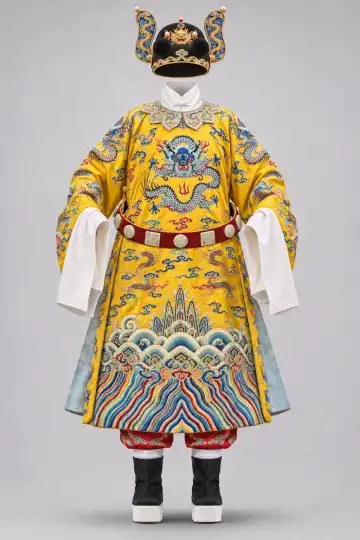
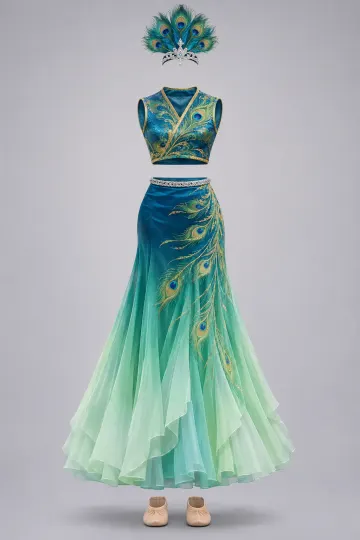
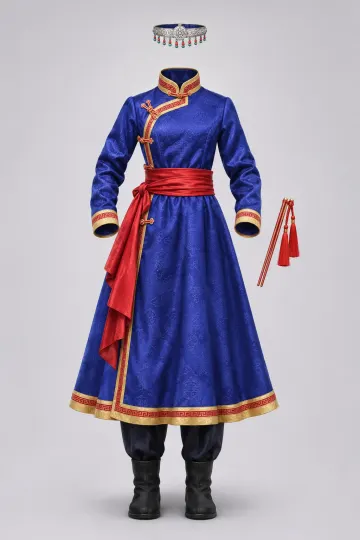
All outfit images are AI-generated. The cut, patterns and colours of historical and ethnic dress may be inaccurate. They are for creative reference only and are not a basis for serious historical or folklore research.
Pale Pink Pei Robe & Moon-White Skirt
淡粉女帔+月白缎裙
Description
头戴点翠头面,额前的梅花泡条中央饰一枚大泡子,两侧排列小泡子,泡子嵌红色水钻;头顶插一支略高出头顶的点翠顶花,侧后插点翠串蝴蝶,鬓边饰一簇浅湖绿色鬓花,另有几支点翠小簪和一排珠花,点翠呈蓝绿色并配以银色;内穿淡粉色女褶子,领口露出,小立领上有一粒盘扣;外穿淡粉色缎面女帔,对襟直领,前襟敞开,领边和前襟镶月白色宽边,边上绣折枝花并饰细蓝色滚边,宽袖接长白绸水袖,下垂过手,衣长至膝下,前襟与下摆散绣折枝海棠;下穿月白色缎面长裙,裙长及足,裙摆盖住脚面;足穿淡粉色绣花平底彩鞋,鞋面饰彩色小朵绣花,只露出鞋尖。
Prompt
The kingfisher-feather headdress includes a plum-blossom forehead band with one large central ornament and smaller ornaments arranged on either side, all set with red rhinestones; a kingfisher-feather ornament rises slightly above the crown, a dangling butterfly ornament sits toward the side and back, and a cluster of pale lake-green flowers, several small kingfisher-feather hairpins, and a row of beaded flowers complete the arrangement in blue-green and silver; underneath is a pale pink women's zhezi, visible only at the neckline, with a small standing collar fastened by one knot button; over it is a pale pink satin women's pei robe with an open front and straight lapels, broad moon-white borders embroidered with flowering branches and finished with narrow blue piping, wide sleeves with long white silk water sleeves extending past the hands, and a hem below the knees, with flowering begonia branches scattered across the front panels and hem; a moon-white satin long skirt reaches the feet and covers their tops; pale pink flat embroidered shoes have small multicolored flowers, with only the toes visible.
About this outfit
In the classification of Chinese opera costumes, both the pei and the xuezi belong to the category of everyday dress; Kunqu’s costume wardrobe system and its rules of dress are an important part of the art form.(partly sourced)1,2 Water sleeves in Chinese opera are lengths of white silk attached beyond the garment’s sleeves; when moved, they extend the lines of the arms and help performers convey emotion.2 The head ornaments worn for female roles come in many forms, including paozi, crown flowers and temple pins; their materials, colours and combinations vary and must suit the role.2 Kunqu costumes are made for stage performance and are governed by conventions of dress; specific styles and colours change to meet the needs of productions.1
- 中国非物质文化遗产网论坛:戏曲学者、昆剧表演艺术家与舞美设计师谈《中国昆曲衣箱》(2010), 中国非物质文化遗产网论坛:戏曲学者、昆剧表演艺术家与舞美设计师谈, 2010, 正文
- 环球网艺术栏目:戏曲行头与审美文化, 正文
Compiled by AI. Sources were cross-checked independently, but AI can still make mistakes; do not use this as a direct basis for serious research.
Example images are for viewing only, not for download.
Outfit details
- Category
- Stage & theatrical
- Occasion
- Performance
- Region and culture
- China › Han
- Era
- Contemporary
- Social role
- Performer
- Gender
- Female
- Season
- All-season