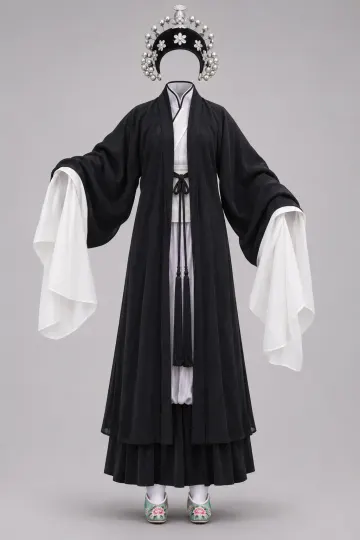
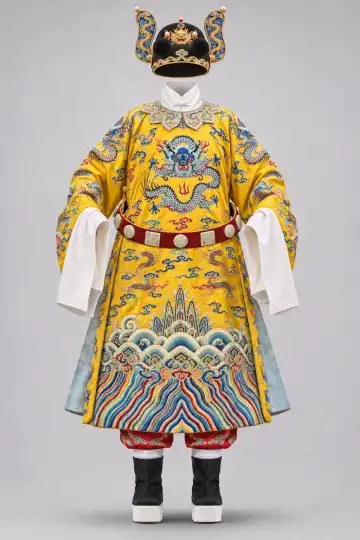
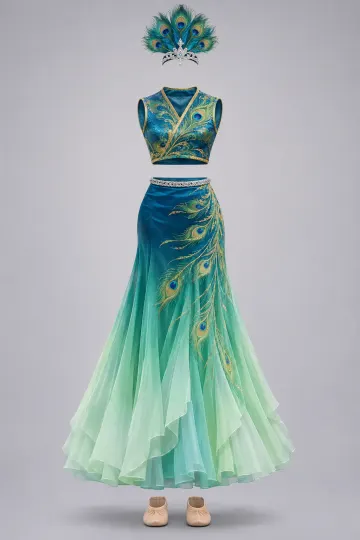
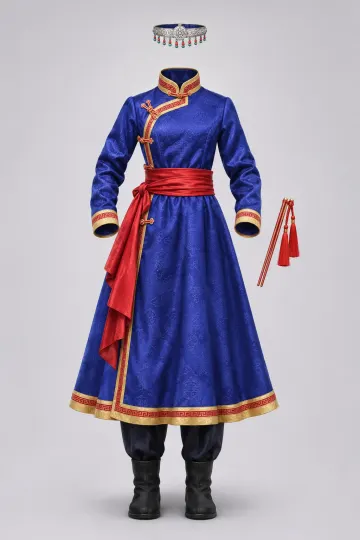
All outfit images are AI-generated. The cut, patterns and colours of historical and ethnic dress may be inaccurate. They are for creative reference only and are not a basis for serious historical or folklore research.
Checked Kitsunagashi & Gray-Blue Haori
格纹着流+灰蓝羽织
Description
内穿白色棉布襦袢,垂领处有一线半襟露在着流领口外,袖型与和服相同,长度及脚踝;外穿灰色细格纹木棉着流,垂领右前左上交叠,衣襟略微松开并以腰带系住,町人男式袖的袖口较窄,衣长及脚踝;外搭深灰蓝色绸羽织,翻折领的领条从后颈通至下摆,方袖比着流袖略短,前襟敞开并在胸前以羽织纽系住,衣长及大腿中部;深褐色厚织角带在背后打成简单的结;浅蓝白色薄棉手拭饰有细碎的豆绞小点,折成长条塞在腰带间,一端垂下;白色棉布足袋将脚趾分成两股;雪駄以本色竹皮编成鞋面,底面贴皮,配黑色鼻绪。
Prompt
A white cotton juban reaches the ankles, with kimono-style sleeves and a draped collar showing a narrow line of haneri at the kitsunagashi neckline; a gray cotton kitsunagashi with a fine check pattern reaches the ankles, its draped collar overlapping right side under left, the front slightly loosened and secured with a sash, and its chonin men's sleeves ending in narrow openings; a dark gray-blue silk haori reaches mid-thigh, with a folded collar band running from the back of the neck to the hem, square sleeves slightly shorter than those of the kitsunagashi, and an open front tied at the chest with haori cords; a dark brown, thickly woven kaku obi is tied in a simple knot at the back; a light blue and white thin cotton tenugui patterned with tiny mameshibori dots is folded lengthwise and tucked into the sash, with one end hanging down; white cotton tabi have split toes; setta sandals have natural-colored woven bamboo-skin footbeds, leather-covered soles, and black thongs.
About this outfit
In the Edo period, the kosode became a basic garment. Its construction comprised fabric folded at the shoulders to form continuous front and back panels, with sleeves, a collar, and overlapping front panels.1,2 In the early modern period, the kosode became the principal form of outer garment for both men and women.2 Town magistrate's officers known as dōshin wore checked or striped kimono without hakama, covered by a black haori bearing crests, and carried a pair of swords at the waist.(No checkable source found; for reference only) In the makibaori style worn by dōshin, the hem of the haori was folded inward and tucked into the sash, unlike an ordinary haori worn loose.(No checkable source found; for reference only)
- 京都风俗博物馆《日本服饰史》:打掛、打掛腰卷姿、庆长小袖、江户前期小袖、江户后期大奥上臈夏腰卷姿、岛原太夫、夏晴着歌妓、, 京都风俗博物馆, 608 江户前期小袖姿
- 日文维基百科:小袖、振袖、裃、羽織、袢纏、股引、襷、町火消、同心、花魁、芸者, 小袖,正文
Compiled by AI. Sources were cross-checked independently, but AI can still make mistakes; do not use this as a direct basis for serious research.
Example images are for viewing only, not for download.
Outfit details
- Category
- Stage & theatrical
- Occasion
- Performance
- Region and culture
- Japan
- Era
- Contemporary
- Social role
- Performer
- Gender
- Male