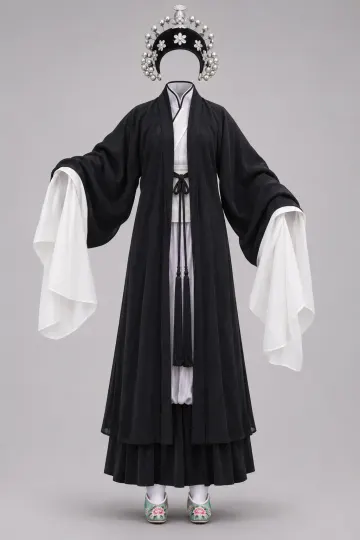
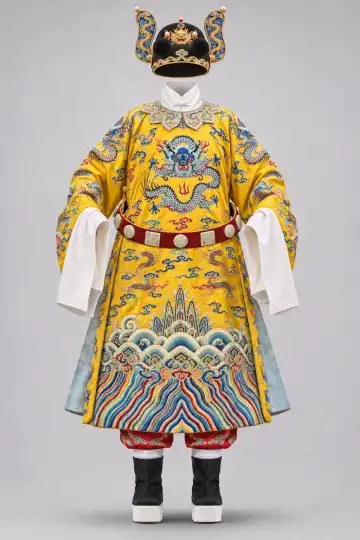
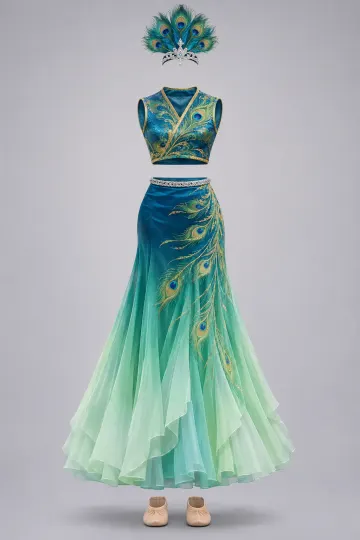
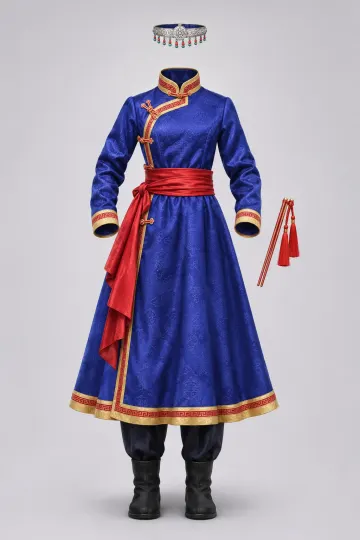
All outfit images are AI-generated. The cut, patterns and colours of historical and ethnic dress may be inaccurate. They are for creative reference only and are not a basis for serious historical or folklore research.
Red Uchikake & Gold Brocade Obi
红地打掛+金地宽带
Description
朱红地厚绢打掛,满身用金线绣出松枝、白樱和水边菖蒲,不系带,前襟敞开,衣长过脚,后摆拖地,下摆絮棉成圆鼓厚边;里面是数件相重的小袖,赤、白、浅蓝几层领口依次错开;红色襦袢;金地大花织锦宽带,在身前打成熨斗结垂下;头上左右各横插三支松形、琴柱形长簪,另有两支珊瑚大玉簪和三把鳖甲栉;脚踩三枚齿黑漆高下驮。
Prompt
Vermilion heavy-silk uchikake overrobe embroidered all over with pine boughs, white cherry blossoms and waterside irises outlined in gold thread, worn open without a sash, falling past the feet with a trailing back hem and a thickly padded, rounded hem edge; several layered kosode beneath, with red, white and pale blue collars staggered at the neckline; red juban underrobe; wide gold brocade obi with a large floral weave, tied at the front in a noshi knot that hangs down; three long pine- and koto-bridge-shaped kanzashi fanned out on each side of the head, plus two large coral-bead hairpins and three tortoiseshell combs; tall black-lacquered three-tooth geta.
About this outfit
Kabuki costumes often consist of brightly colored layers of kimono, with padding underneath to create a silhouette suited to the role.1 An uchikake is cut in the same manner as a kosode and worn over it without being tied closed with a sash.(partly sourced)2,3 The black-lacquered high geta worn for Yoshiwara oiran processions had three teeth and were tall and heavy.(No checkable source found; for reference only) An ornate oiran coiffure could carry three long hairpins on each side, along with large coral-bead pins and tortoiseshell combs, creating a broad silhouette.(No checkable source found; for reference only) The kosode style popular during the Genroku period is said to have been introduced by townspeople in the Kamigata region and was characterized by bright colors and freely drawn patterns.2
- Wikipedia《Kabuki》, Wikipedia, Costumes 节
- 日文维基百科:小袖、振袖、裃、羽織、袢纏、股引、襷、町火消、同心、花魁、芸者, E2「小袖」正文;E1「打掛」第586页
- 京都风俗博物馆《日本服饰史》:打掛、打掛腰卷姿、庆长小袖、江户前期小袖、江户后期大奥上臈夏腰卷姿、岛原太夫、夏晴着歌妓、, 京都风俗博物馆, E2「小袖」正文;E1「打掛」第586页
Compiled by AI. Sources were cross-checked independently, but AI can still make mistakes; do not use this as a direct basis for serious research.
Example images are for viewing only, not for download.
Outfit details
- Category
- Stage & theatrical
- Occasion
- Performance
- Region and culture
- Japan
- Era
- Contemporary
- Social role
- Performer
- Gender
- Female