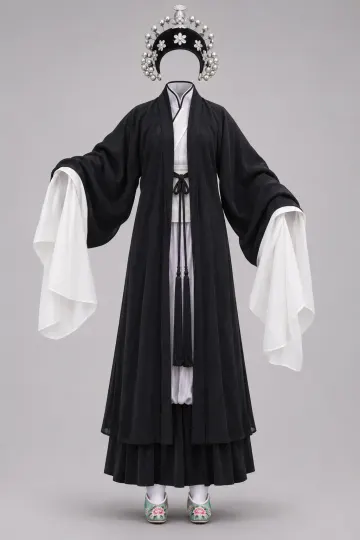
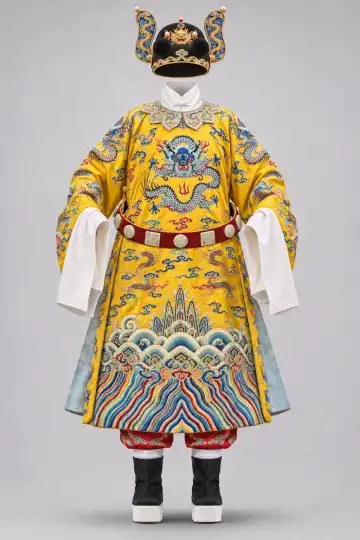
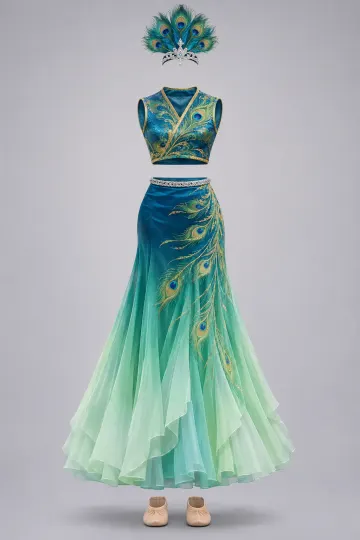
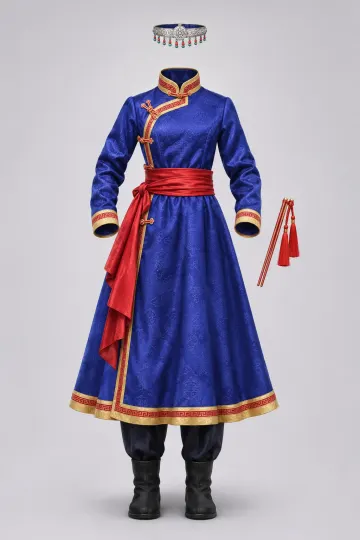
All outfit images are AI-generated. The cut, patterns and colours of historical and ethnic dress may be inaccurate. They are for creative reference only and are not a basis for serious historical or folklore research.
Red Crepe Furisode & Gold-Brown Obi
红绉振袖+金茶宽带
Description
几支红、粉、白色绢花簪与一把鳖甲栉;绯红绢襦袢,领口与下摆微露;大红地绉绸振袖,长及脚面、下摆絮棉略拖地,长袖垂到膝下,满身刺绣白牡丹、粉樱枝、青绿枫叶与金线飞鸟;金茶地织锦宽带,在背后打成大结;白足袋;黑漆双齿下驮配红色鼻绪。
Prompt
Several silk flower hairpins in red, pink and white with a tortoiseshell comb; a scarlet silk under-kimono showing at the collar and hem; a vivid red crepe furisode reaching the feet with a padded, slightly trailing hem and long sleeves hanging below the knees, embroidered all over with white peonies, pink cherry sprays, green maple leaves and gold-thread birds; a wide gold-brown brocade obi tied in a large bow at the back; white split-toe tabi socks; black lacquered two-toothed geta with red thongs.
About this outfit
Kabuki costumes draw on the clothing of townspeople, warrior households, and the pleasure quarters of the Edo period, often using vivid colors and multiple layers.(partly sourced)1 The furisode follows the basic kosode construction: its front and back body panels are continuous, with two widths of cloth for the body, one for each sleeve, and added front panels. The sleeve is attached to the body along a short section, leaving an opening called the furi.(partly sourced)2 In kabuki dance, long, voluminous sleeves can convey a range of emotions, and their length varies with the type of role.1 Obi gradually became wider during the Edo period, and young women were among the earlier wearers to tie them at the back. The uchikake, cut in the same manner as a kosode, is worn over other garments without an obi tied around it.(partly sourced)3,2
- Wikipedia《Kabuki》, Wikipedia, Costumes 节
- 日文维基百科:小袖、振袖、裃、羽織、袢纏、股引、襷、町火消、同心、花魁、芸者, 小袖、振袖条目
- 京都风俗博物馆《日本服饰史》:打掛、打掛腰卷姿、庆长小袖、江户前期小袖、江户后期大奥上臈夏腰卷姿、岛原太夫、夏晴着歌妓、, 京都风俗博物馆, 625、586
Compiled by AI. Sources were cross-checked independently, but AI can still make mistakes; do not use this as a direct basis for serious research.
Example images are for viewing only, not for download.
Outfit details
- Category
- Stage & theatrical
- Occasion
- Performance
- Region and culture
- Japan
- Era
- Contemporary
- Social role
- Performer
- Gender
- Female
- Season
- All-season