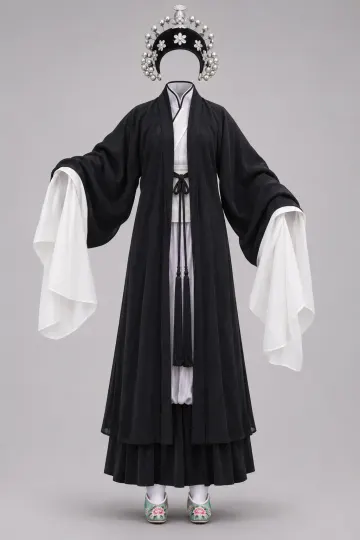
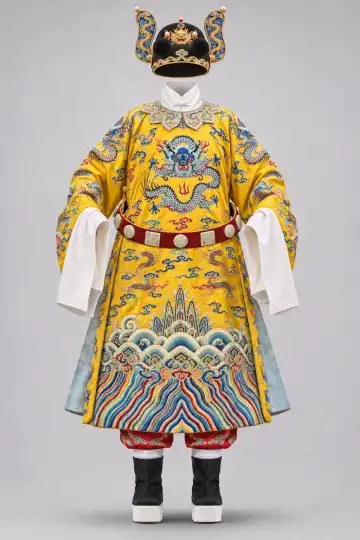
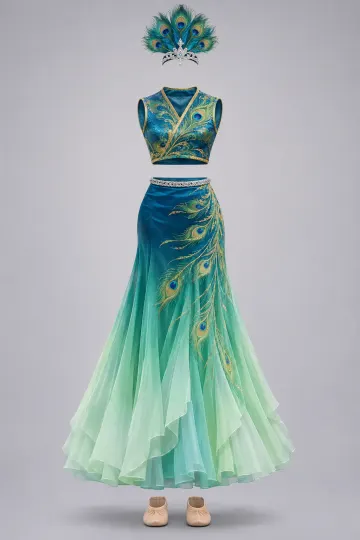
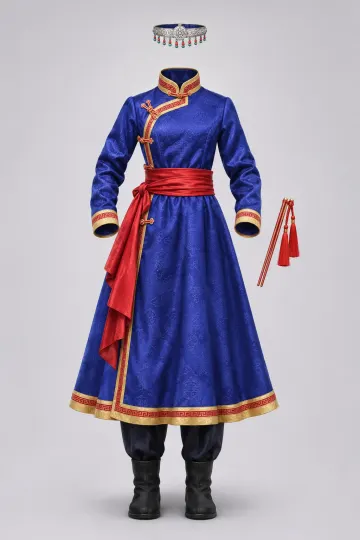
All outfit images are AI-generated. The cut, patterns and colours of historical and ethnic dress may be inaccurate. They are for creative reference only and are not a basis for serious historical or folklore research.
Gold Kariginu & Checked Kitsuke
金纹狩衣+格纹着付
Description
头戴黑色漆纱乌帽子,帽顶高耸,折角硬挺;内穿白色内衣;上穿格纹厚板着付;外穿深色地配金纹的狩衣,圆领宽袖,两腋敞开,衣身长垂,袖幅宽大,饰有连续排列的几何框与团花纹;下穿白色大口袴,袴身宽大,后片挺立,长度及脚踝;腰系腰带;足穿白色足袋与草履;配扇。
Prompt
A black lacquered-gauze eboshi has a tall crown with sharply structured folds; a white undergarment is worn beneath a check-patterned atsuita kitsuke; the outer kariginu has a dark ground with gold motifs, a round neckline, wide sleeves, open sides under the arms, a long draping body, and a repeating pattern of geometric frames and floral medallions; the white ōguchi hakama are voluminous, with an upright back panel and hems reaching the ankles; a belt is worn at the waist; white tabi socks are paired with zōri sandals; a fan completes the ensemble.
About this outfit
Noh costumes once imitated the actual clothing associated with their characters, including court dress; from the late sixteenth century onward, they became stylized and developed symbolic conventions.1 In Hagoromo, the celestial maiden, the principal role, wears a ko-omote mask, a long wig, and a celestial crown. She wears a foil-decorated kosode, wraps an embroidered kosode with red accents around her waist, and wears a chōken robe over it while holding a kazura-ōgi fan.2 A mizugoromo is an unpatterned, wide-sleeved garment that reaches approximately to the knees.(No checkable source found; for reference only)
- Wikipedia《Noh》Costumes 一节, Wikipedia, Costumes 节
- 京都风俗博物馆《日本服饰史》580 能乐·羽衣シテ(天人)、581 能乐·水衣角帽子姿, 京都风俗博物馆, 「シテ(主役)の天人は小面こおもて等をつけ」至「鬘扇(中啓)を手にしている」
Compiled by AI. Sources were cross-checked independently, but AI can still make mistakes; do not use this as a direct basis for serious research.
Example images are for viewing only, not for download.
Outfit details
- Category
- Stage & theatrical
- Occasion
- Performance
- Region and culture
- Japan
- Era
- Contemporary
- Social role
- Performer
- Gender
- Male
- Season
- All-season