All outfit images are AI-generated. The cut, patterns and colours of historical and ethnic dress may be inaccurate. They are for creative reference only and are not a basis for serious historical or folklore research.
Jingasa & Do-Maru & Yohaba Hakama
阵笠+胴丸+四幅袴
Description
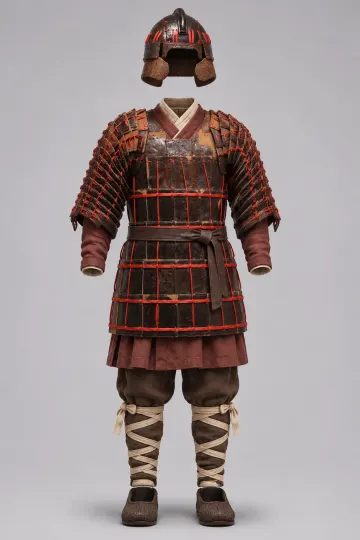
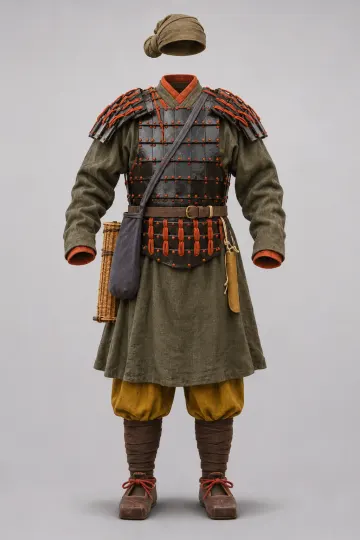
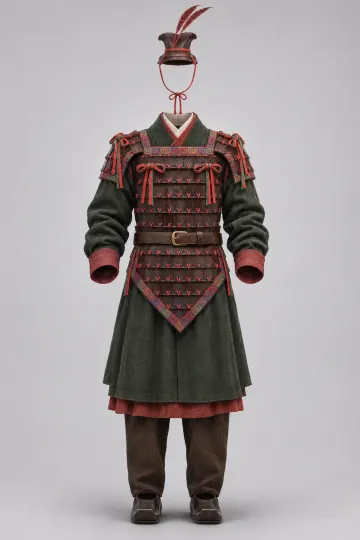
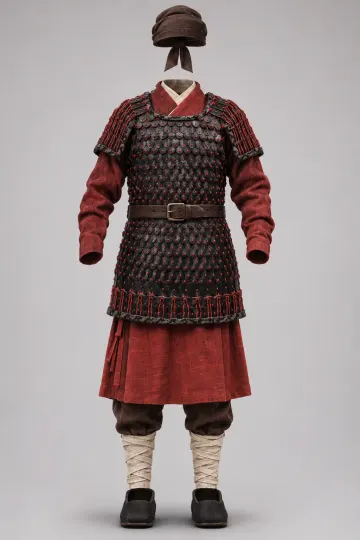
黑漆锻铁阵笠呈笠形,笠檐宽出肩线;黑色棉布手细短上衣为右衽交领,细窄筒袖长至手腕,衣身下摆塞进袴腰;简易铁胴由数道朱红漆横向铁板以黑色丝绳分段编缀而成,前后护住胸、腹和背部,胴身长至腰部,下缘垂有几片长至大腿上部的短草摺;籠手以黑布为底,缝有朱红漆窄长铁片,从上臂覆盖至手背;朱红色棉布四幅袴由四幅布拼成,长至膝下;黑色棉布胫巾从膝下紧缠至脚踝;朱红色棉布腰带在胴外绕腰数圈后打结,带头垂下;稻草本色的足半草鞋只覆盖前半脚掌,以绳系住。
Prompt
A black-lacquered wrought-iron jingasa has a broad brim extending beyond the shoulders; a black cotton tedashi short jacket has a crossed collar with the left front over the right, narrow tubular sleeves reaching the wrists, and a hem tucked into the hakama; a simple cuirass consists of horizontal iron plates finished in vermilion lacquer and laced together in sections with black silk cord, covering the chest, abdomen, and back to the waist, with several short kusazuri panels hanging to the upper thighs; kote arm guards have black cloth foundations sewn with long, narrow vermilion-lacquered iron strips and extend from the upper arms to the backs of the hands; vermilion cotton yohaba-bakama are made from four panels and reach below the knees; black cotton shin wraps are wound tightly from below the knees to the ankles; a vermilion cotton sash is wrapped several times around the waist over the cuirass and tied with its ends hanging down; natural-colored rice-straw ashihan sandals cover only the front halves of the feet and are secured with cords.
About this outfit
During Japan’s Warring States period, ashigaru were formally registered lower-ranking warriors organized into units armed with spears, bows, or firearms.(No checkable source found; for reference only) Jingasa were issued to ashigaru and other foot soldiers as substitutes for helmets. Early examples were made from hardened leather reinforced with iron, while forged and lacquered iron versions appeared after firearms became widespread.(No checkable source found; for reference only) Ashigaru could wear iron torso armor; contemporary tōsei gusoku also used larger scales, solid horizontal plates, or single-piece plates to simplify armor construction.(partly sourced)1 Foot soldiers wearing haramaki-style abdominal guards in the Muromachi period wore narrow-sleeved tesoshi jackets and yohaba hakama made from four widths of cloth, with shin wrappings and ashihan sandals on bare feet.(No checkable source found; for reference only) During the Nanboku-chō period, as group combat and close-range fighting on foot became more common, dō-maru armor also came into widespread use among high-ranking warriors.1
- 日文维基百科「大鎧」「当世具足」「陣笠」「足軽」条目, 日文维基百科, 足軽条
- 京都风俗博物馆《日本服饰史》:大铠武将、胴丸武士、大袖付胴丸、小具足武将、腹卷武士、腹当杂兵、当世具足与阵羽织, 京都风俗博物馆, 日本服饰史第562号「腹当雑兵」
Compiled by AI. Sources were cross-checked independently, but AI can still make mistakes; do not use this as a direct basis for serious research.
Example images are for viewing only, not for download.
Outfit details
- Category
- Armor & warrior
- Occasion
- Battle
- Region and culture
- Japan
- Social role
- Soldier
- Gender
- Male
- Season
- All-season