All outfit images are AI-generated. The cut, patterns and colours of historical and ethnic dress may be inaccurate. They are for creative reference only and are not a basis for serious historical or folklore research.
Star Helmet & Dō-maru & Ōsode & Kote
星兜+胴丸+大袖+籠手
Description
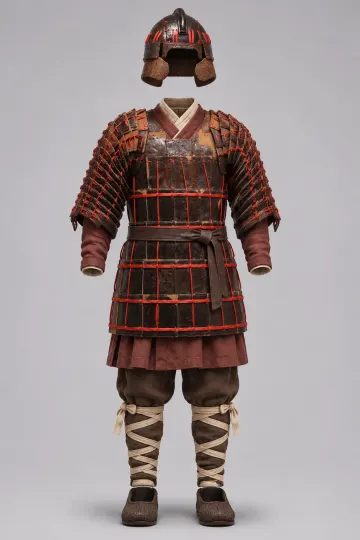
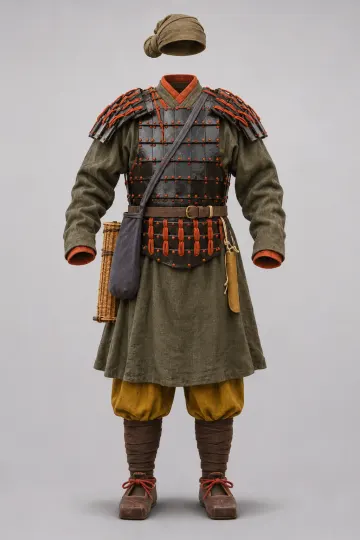
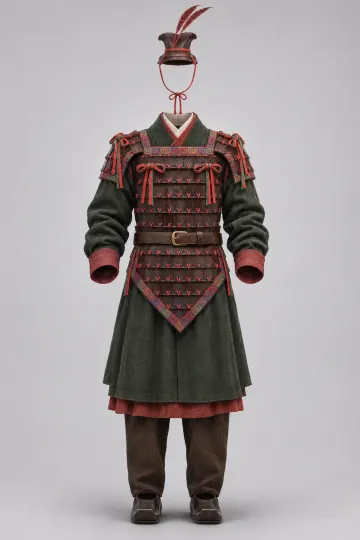
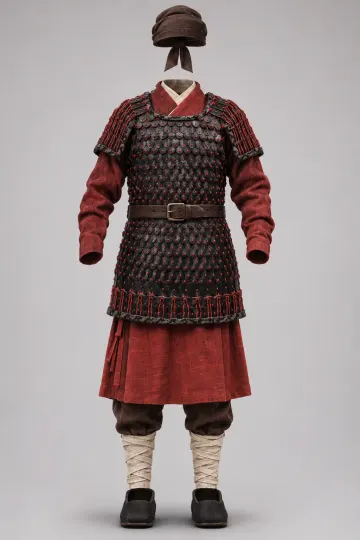
黑漆星兜,兜钵上有成行星铆钉,下接萌葱丝缀錣,两侧有小吹返;黑漆侍乌帽子配黑漆铁半首;萌葱丝威胴丸,肩部一段白丝,右腋开合,胸前挂一对镀金唐草木叶形杏叶,腰下八片草摺,下缘缀朱红菱缝;一对同色方形大袖垂到上臂;浅黄褐编绳上带;藏青绢铠直垂,袖口收紧,内衬白色小袖;同色宽袴,白色袴腰;白胫巾配黑漆臑当;黑漆铁片籠手配皮手套;深褐革足袋;草编草鞋。
Prompt
Black-lacquered star helmet with rows of raised rivets, a moegi-green laced neck guard and small turned-back side flaps; black lacquered samurai cap with a black lacquered iron half-mask; moegi-green silk-laced dō-maru with a band of white lacing at the shoulders, opening at the right side, a pair of gilt arabesque leaf-shaped gyōyō plates on the chest, and eight tassets edged with vermilion cross-knot lacing; a pair of matching broad square ōsode hanging to the upper arm; light tan braided waist cord; navy silk armor hitatare with cord-gathered cuffs over a white kosode; matching wide hakama with a white waistband; white shin wraps with black lacquered shin guards; black lacquered iron-plated sleeve gauntlets with leather archery gloves; dark brown leather tabi; braided straw sandals.
About this outfit
Around the Nanboku-chō period, as group combat and close fighting on foot became widespread, higher-ranking warriors also increasingly used dō-maru and haramaki armor.1 Like haramaki, dō-maru armor was formed in large part from small armor scales called kozane.1 The body armor was made of overlapping rows of small scales, while the large shoulder guards hung at the sides to protect the shoulders and upper arms.1 One color scheme for a dōmaru with large shoulder guards used light green silk lacing with white lacing at the shoulders.(No checkable source found; for reference only) Unlike ōyoroi, dōmaru lacked the sendan, kyūbi, saka-ita and right-side waidate plates; ōyoroi also had four kusazuri panels at the front, back and sides.(partly sourced)2,1 An armor hitatare was worn beneath the armor; the lower legs could be wrapped in habaki and fitted with shin guards, with leather tabi and straw sandals on the feet.(partly sourced)2,1
- 日文维基百科「大鎧」「当世具足」「陣笠」「足軽」条目, 日文维基百科, 南北朝時代頃に集団戦・接近徒歩戦が盛んになると…上級武士の間においても胴丸・腹巻が多く用いられるようになった
- 京都风俗博物馆《日本服饰史》:大铠武将、胴丸武士、大袖付胴丸、小具足武将、腹卷武士、腹当杂兵、当世具足与阵羽织, 京都风俗博物馆, 535
Compiled by AI. Sources were cross-checked independently, but AI can still make mistakes; do not use this as a direct basis for serious research.
Example images are for viewing only, not for download.
Outfit details
- Category
- Armor & warrior
- Occasion
- Battle
- Region and culture
- Japan
- Social role
- Soldier
- Gender
- Male
- Season
- All-season