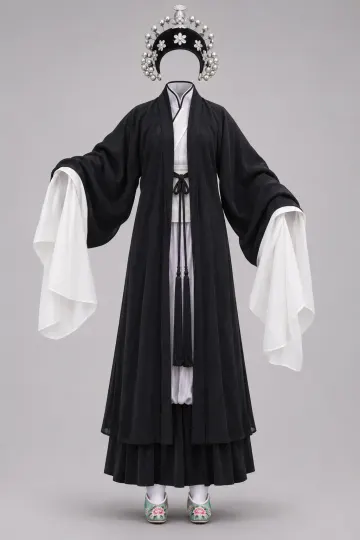
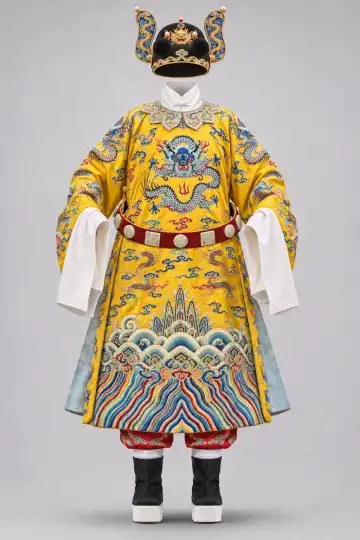
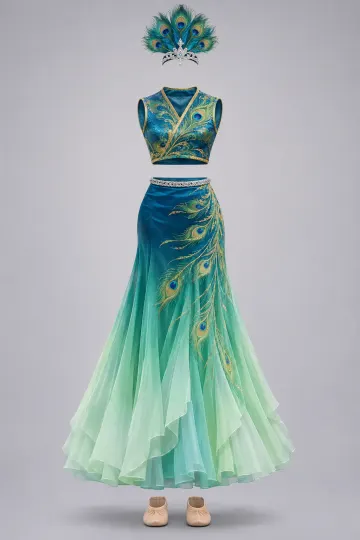
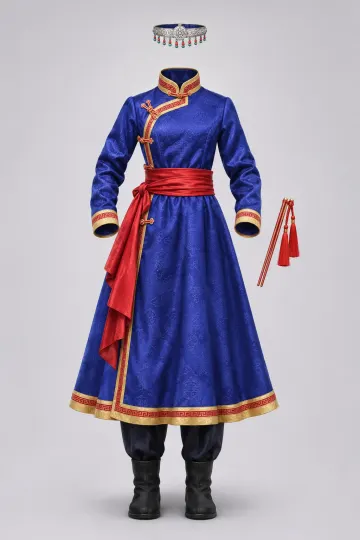
所有服装图均由 AI 生成。历史、民族服饰的形制、纹样、配色可能有误,仅供创作参考,不能作为严肃历史或民俗研究的依据。
深蓝狩衣+白大口袴
Navy Kariginu & White Oguchi Hakama
描述
头戴黑色漆纱乌帽子,冠身高起,立于头顶;内穿白色丝质交领内衣,衣领在狩衣圆领内微露;上装为深色地格纹厚织丝小袖厚板着付,衣长及踝,袖口窄小,从狩衣两腋开衩处露出;外罩深藏青地狩衣,以织入金线的厚重织锦制成,满布金褐色连续几何纹,八角形与小方格相间,八角内饰团花,方格内饰小花,圆领在领侧系扣,两腋开衩,宽大袖口边缘穿有浅杏色袖括绳,绳端垂有流苏,前身长及大腿,后身垂至膝下;下穿白色厚丝大口袴,袴身宽大,后片挺立,褶襞分明,长及脚踝;狩衣下系有同色系腰带;足穿白足袋;外穿浅色草编底草履,配白色鼻绪;配有一把彩绘扇面的折扇。
提示词
A black lacquered-gauze eboshi stands high on the head with a raised crown; a white silk undergarment with a crossed collar shows slightly inside the round neck of the kariginu; a dark-ground, checked atsu-ita kitsuke is made of thickly woven silk, falls to the ankles, has narrow sleeve openings and shows through the openings under the arms of the kariginu; the outer kariginu is made of heavy, gold-threaded brocade on a deep navy ground, with an all-over geometric pattern in golden brown of alternating octagons and small squares enclosing round floral motifs and small flowers respectively, a round neck fastened at the side, openings under the arms, and broad sleeves edged with pale apricot cords whose ends hang in tassels, while its front falls to the thighs and its back below the knees; white thick-silk ōguchi hakama fall to the ankles, with a voluminous body, an upright back panel and defined pleats; a belt in the same color family as the kariginu is tied underneath it; white tabi cover the feet; zōri have pale woven-straw soles and white thongs; a folding fan has a painted fan surface.
服饰说明
能乐装束曾模仿角色的实际衣着,包括公家礼服与平民服饰,后来逐渐形成程式化的舞台装束。1 能乐装束常用丝织物,色彩鲜明,织造与刺绣装饰繁复;主角的装束通常最为华丽。1 《羽衣》中的天人头戴天冠,外披带有羽衣纹样的长绢。2
- Wikipedia《Noh》Costumes 一节,Wikipedia,Costumes 一节
- 京都风俗博物馆《日本服饰史》580 能乐·羽衣シテ(天人)、581 能乐·水衣角帽子姿,京都风俗博物馆,天冠を戴く;羽衣になぞらえた文様の長絹をうちかけ
资料由AI整理,证据做过旁路校验,但AI仍可能出错,请勿当做严肃研究参考的直接依据
效果图只展示,不提供下载。